727-842-7350

Menu
  • Home
  • About Us
    • Meet our team
    • Contact Us
  • Services
    • Wellness Plans
    • Wet Paws Parlor
  • Animal Wellness
  • New Patient Center
    • Online Forms
    • Payment Options
  • Testimonials
  • Blog
  • Veterinary Topics
    • Pet Health
      • Chronic Conditions
      • Digestive and Oral Health
      • Diseases and Viruses
      • Pests and Parasites
      • Orthopedics
    • Today's Veterinarian
    • Choosing Your Pet
      • Finding Your Pet
      • Cats
      • Dogs
      • Exotics
        • Reptiles
          • Lizards
          • Turtles
    • Living With Your Pet
      • Bringing Your Pet Home
      • Providing Care
      • Travel
      • Saying Goodbye
    • Newsletter Library
      • Cats
      • Tips for Pet Owners
      • Behavior & Training
      • Fleas & Parasites
      • Keeping Pets Healthy
      • Recognizing Illness
      • Nutrition & Food
      • Pet Dangers
      • Seasonal Topics
      • Visiting the Vet
      • Newsletter Archive
        • Fun with Pets
        • Unbelievable Pets
    • Video Newsroom
      • Health Topics
      • Technology and Science
      • Other Interests
    • Client Survey
    • Pets4Kids
  • Online Store
  • Home >
  • Articles >
  • Newsletter Library >
  • Recognizing Illness >
  • Lyme Disease & Your Pets

Lyme Disease & Your Pets

  • Created in Newsletter Library, Recognizing Illness
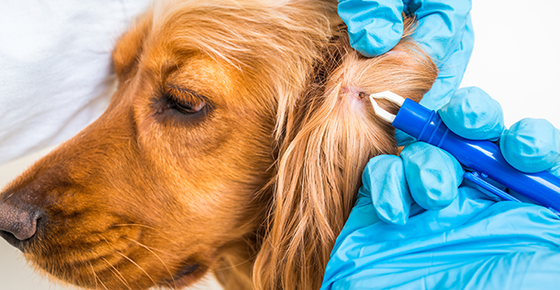
Image of vet removing tick from dog's ear.

How to Prev­ent and Remove Ticks

Lyme disease is a top concern for dog owners who enjoy walking with their dog in grassy and wooded areas. Transmitted by deer ticks, Lyme disease can result in fever, joint lameness, fatigue, and general discomfort for your pet. While treatment is available, Lyme disease is best prevented. Here is how to prevent Lyme disease and remove troublesome ticks.

Prevention Tips:

Try to avoid heavily wooded areas or tall grass when walking your pet.

Always be sure you check for ticks as soon as you are done with your walk. Make a point to investigate everyone in the family before returning to the car after a hike.

Be thorough when looking for ticks. Check in places your pet cannot get at such as the back of the head and neck. Ticks will tend to bury themselves in areas pets cannot reach.

Remove any tick(s) you find promptly and dispose of them properly. Proper disposal means killing the tick before disposing of it in a secured trash can.

Use a topical formula such as Frontline to help keep ticks from "digging in" to your pet. Frontline is a topical formula developed in France for children with head lice. Knowing it was developed for humans should make you feel comfortable about putting it on your pet. Apply the product to the back of the neck where the pet can not lick it off or get its paw up to scratch and then lick and ingest.

We can help you put this on or show you the first time. There are also instructions in the package. It is easy to apply and should be applied monthly. Frontline does not allow the tick to penetrate the skin. Instead it kills the tick and the tick falls off.

Instructions for Removing a Tick:

If you find a tick on your pet, get a pair of fine-nosed tweezers to remove it. Wash the tweezers with warm, soapy water before and after use. Wash your hands as well.

Have someone hold your pet so they do not get distracted and move on you.

Grasp the head of the tick as close to the skin as possible. Do not squeeze the body of the tick! You want the nose, not the body.

Pull the tick straight out. You may have to be firm when you pull. This is okay and should not hurt your pet.

Put the tick into a small jar of rubbing alcohol (to kill it). You can also flush the tick, or run it through the garbage disposal with hot water.

Rub the area with rubbing alcohol to kill germs, and petroleum jelly (if it is not in an area where your pet will lick it off) to sooth the area.

If you notice a rash or anything red, blotchy, itchy, etc., make an appointment to have your pet checked. A fever, sudden joint lameness, fatigue, and not eating are other signs it is time to give us a call!

  • Pet Health
    • Chronic Conditions
    • Digestive and Oral Health
    • Diseases and Viruses
    • Pests and Parasites
    • Orthopedics
  • Today's Veterinarian
  • Choosing Your Pet
    • Finding Your Pet
    • Cats
    • Dogs
    • Exotics
      • Reptiles
        • Lizards
        • Turtles
  • Living With Your Pet
    • Bringing Your Pet Home
    • Providing Care
    • Travel
    • Saying Goodbye
  • Newsletter Library
    • Cats
    • Tips for Pet Owners
    • Behavior & Training
    • Fleas & Parasites
    • Keeping Pets Healthy
    • Recognizing Illness
    • Nutrition & Food
    • Pet Dangers
    • Seasonal Topics
    • Visiting the Vet
    • Newsletter Archive
      • Fun with Pets
      • Unbelievable Pets
  • Video Newsroom
    • Health Topics
    • Technology and Science
    • Other Interests
  • Client Survey
  • Pets4Kids

Welcome to Animal Hospital New Port Richey

Sign Up Using the Form Below or Call Us at 727-842-7350.

  • Services

    We will do our best to accommodate your busy schedule. Schedule an appointment today!
    View Services
  • Online Forms

    Our patient forms are available online so they can be completed in the convenience of your own home or office.
    View Forms

Office Hours

Our Regular Schedule

Animal Hospital of New Port Richey

Monday:

8:00 am-6:00 pm

Tuesday:

8:00 am-6:00 pm

Wednesday:

8:00 am-6:00 pm

Thursday:

8:00 am-6:00 pm

Friday:

8:00 am-6:00 pm

Saturday:

8:00 am-12:00 pm

Sunday:

Closed

Connect With Us

Location

Find us on the map

  • Copyright © 2026 MH Sub I, LLC dba iMatrix.
  • Admin Log In
  • Site Map